

in one-stop service
Table of contents
1.What Is SUS304 Stainless Steel?
2. What Is SUS316L Stainless Steel?
3. SUS304 vs SUS316L: What Are the Main Differences?
4. Which Stainless Steel Is Better for Different Cosmetic Products?
5. How to Choose the Right Material for Cosmetic Manufacturing Equipment?
6. Stainless Steel Options for YETO Cosmetic Manufacturing Equipment
7. Frequently Asked Questions
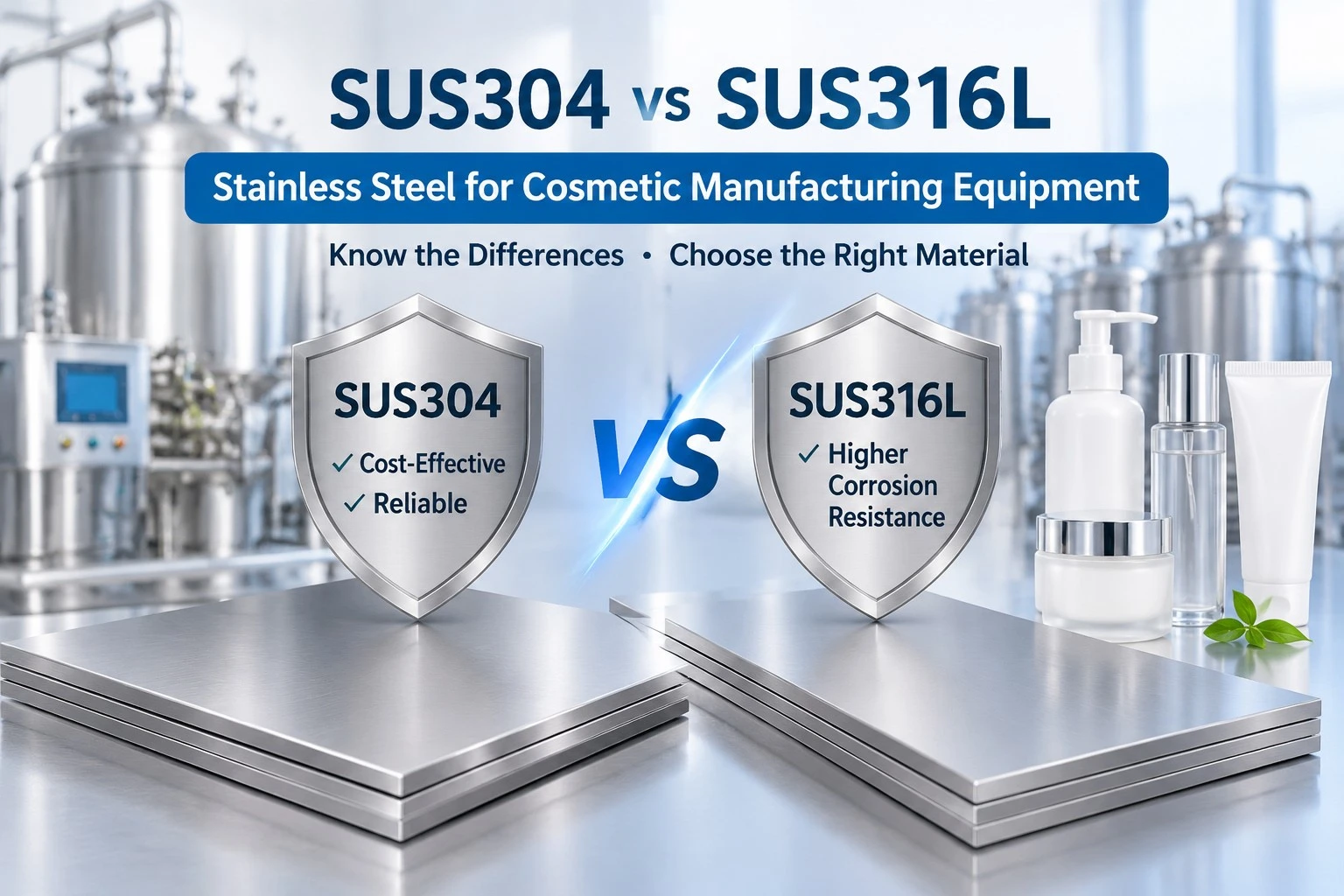
What Is SUS304 Stainless Steel?
SUS304 is an austenitic stainless steel containing approximately 18% chromium and 8% nickel. It offers good corrosion resistance, excellent formability, and easy maintenance.
It is widely used in cosmetic manufacturing equipment because it provides a practical balance between performance and cost.
Common applications include:
◆Cosmetic liquid mixing tanks
◆Shampoo and body wash production tanks
◆Lotion mixing equipment
◆Storage tanks for general cosmetic raw materials
◆Supporting frames and machine components
For many standard cosmetic formulations, SUS304 is a suitable and economical material choice.
What Is SUS316L Stainless Steel?
SUS316L is a low-carbon austenitic stainless steel containing chromium, nickel, and molybdenum.
The addition of molybdenum improves its resistance to chloride-related corrosion and certain chemical environments. Its low carbon content also helps reduce the risk of sensitization during welding.
SUS316L is commonly selected for applications involving more demanding chemical conditions or stricter material requirements.
Common applications include:
◆Vacuum emulsifying machines
◆High-grade cosmetic cream production equipment
◆Perfume and specialty liquid processing systems
◆Tanks handling corrosive ingredients
◆Equipment requiring enhanced corrosion resistance
However, SUS316L is not automatically necessary for every cosmetic production application. The actual formulation and operating conditions should determine the material selection.
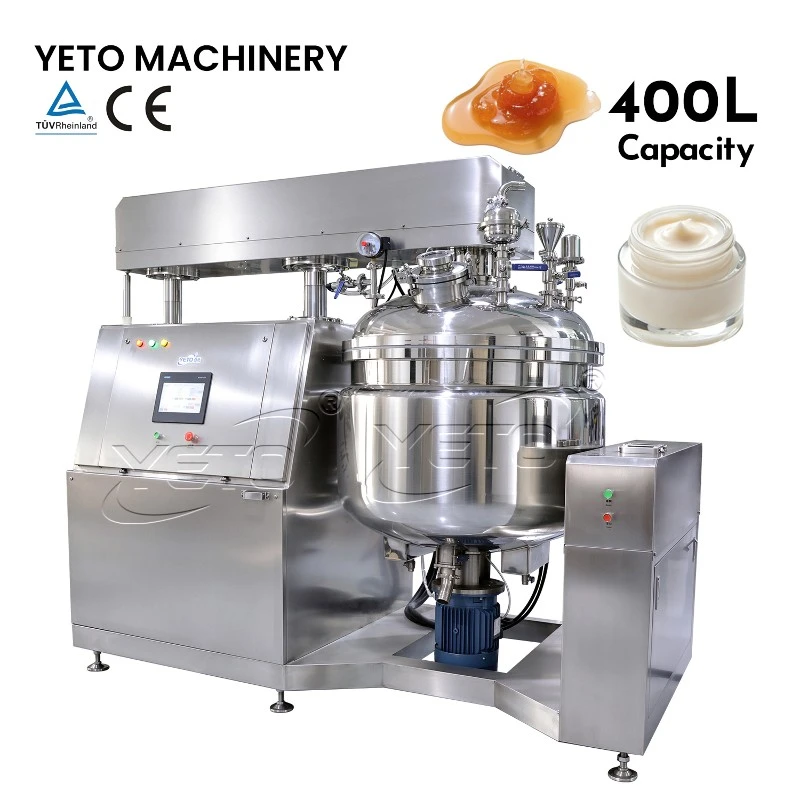
All product contact material is Stainless steel 316L
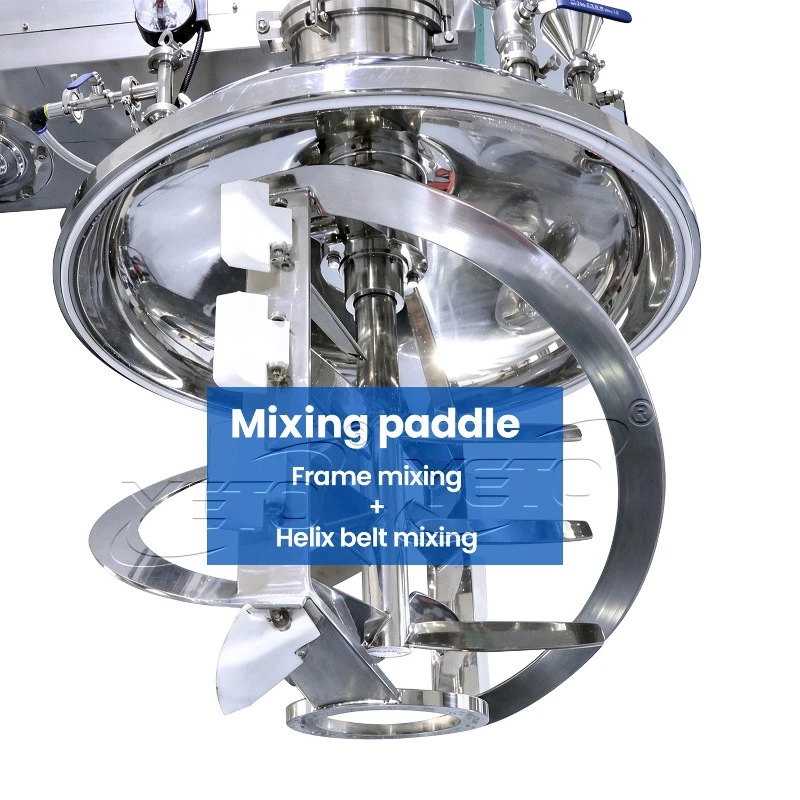
SUS304 vs SUS316L: What Are the Main Differences?
The following table summarizes the key differences between the two stainless steel grades.
| Comparison | SUS304 | SUS316L |
|---|---|---|
| Main composition | Chromium and nickel | Chromium, nickel and molybdenum |
| Corrosion resistance | Good | Generally better, especially against chlorides |
| Chemical resistance | Suitable for many standard formulations | Better for more demanding chemical environments |
| Carbon content | Standard carbon level | Low carbon |
| Welding properties | Good | Good, with reduced sensitization risk |
| Material cost | Generally lower | Generally higher |
| Typical application | Standard cosmetic production | More demanding production conditions |
Both materials are widely used in industrial manufacturing. SUS316L generally provides better resistance to certain corrosive environments, but the actual performance depends on chemical concentration, temperature, exposure time, and cleaning conditions.
Which Stainless Steel Is Better for Different Cosmetic Products?
Different cosmetic products have different ingredient compositions. Therefore, the material selection should be based on the actual production requirements.
★Shampoo and Body Wash Production
SUS304 can be suitable for many standard shampoo and body wash formulations.
However, some formulations contain chloride salts or other ingredients that may increase corrosion risks. In these cases, SUS316L may be a better option.
★Lotion and Cream Production
Both SUS304 and SUS316L can be used in lotion and cream manufacturing equipment.
For standard formulations, SUS304 may meet the requirements. For more demanding formulations or projects with specific material requirements, SUS316L is worth considering.
★Perfume Production
Perfume production involves alcohol-based formulations and different fragrance ingredients.
Material compatibility should be evaluated according to the actual formulation and process conditions. SUS316L may be selected when enhanced corrosion resistance or specific customer material requirements are involved.
★Sensitive Cosmetic Formulations
For products containing active ingredients, salts, acids, or other potentially corrosive components, manufacturers should evaluate the chemical compatibility of all product-contact surfaces before selecting the stainless steel grade.
How to Choose the Right Material for Cosmetic Manufacturing Equipment?
Before purchasing a mixing tank or vacuum emulsifying machine, consider the following factors:
1. Product Formulation
Check the ingredients, pH value, chloride concentration, and chemical properties of the materials being processed.
2. Operating Temperature
Higher processing temperatures can affect corrosion behavior. Material selection should consider the actual working temperature.
3. Cleaning Requirements
Consider the cleaning agents, cleaning temperature, and cleaning frequency used in the factory.
4. Product Contact Requirements
Identify which machine components directly contact the product. The tank, agitator, homogenizer, pipelines, valves, and fittings may require different material specifications.
5. Budget and Long-Term Maintenance
SUS316L generally costs more than SUS304. The best choice should balance initial investment, corrosion resistance, equipment service life, and maintenance costs.
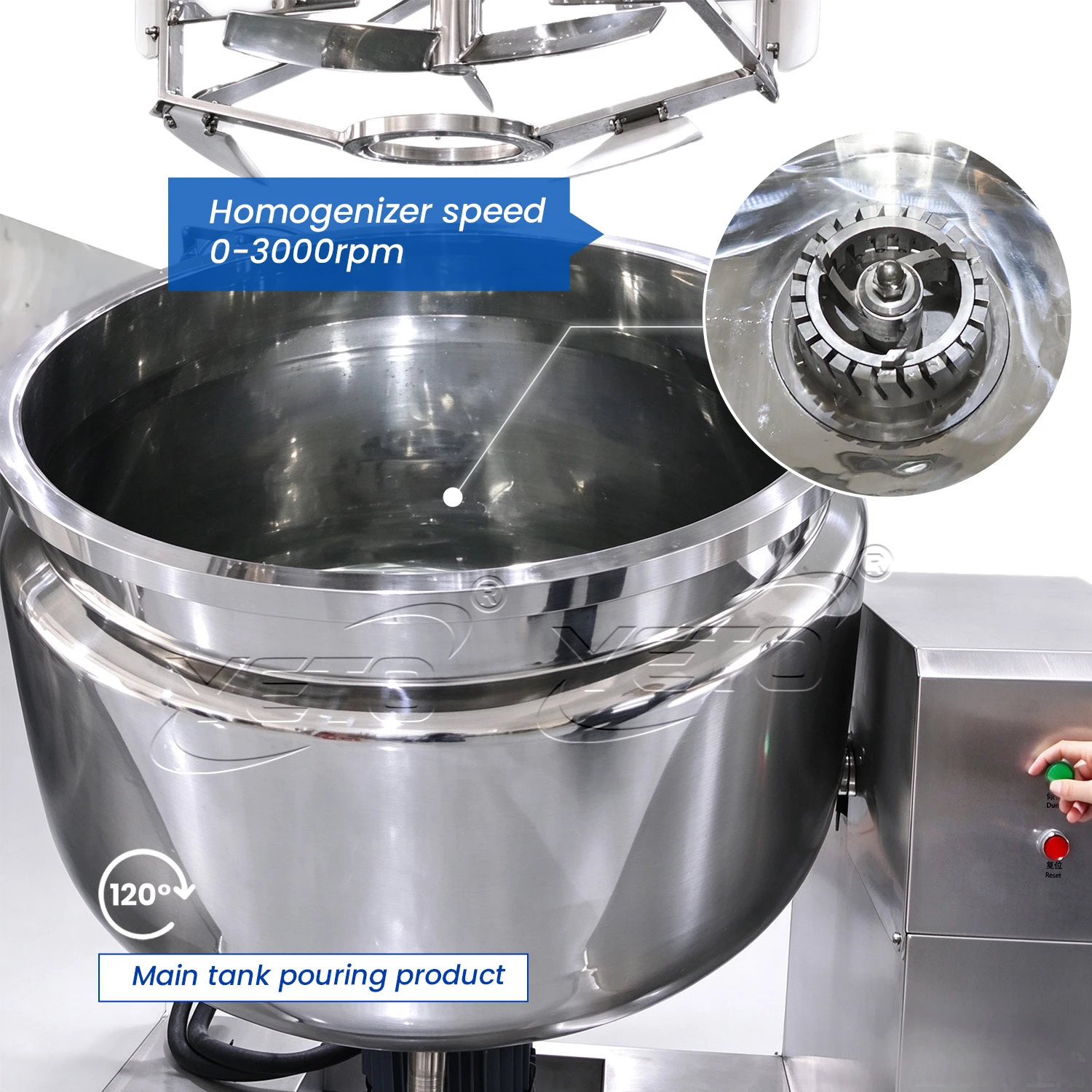
Vacuum Homogenizing Emulsifying Machine for Cosmetics Manufacturing
Key Features for homogeniuzer:
High-speed shearing for fine homogenization.
Uniform dispersion of oil and water phases.
Helps reduce particle size and improve product texture.
Suitable for high-viscosity cosmetic formulations.
Produces smooth and uniform creams and lotions.
Stainless Steel Options for YETO Cosmetic Manufacturing Equipment
Guangzhou YETO Machinery provides cosmetic and perfume production equipment, including vacuum emulsifying machines, homogenizing mixing tanks, liquid mixing tanks, and complete production solutions.
Depending on the product formulation and customer requirements, equipment can be configured with SUS304 or SUS316L stainless steel.
Typical equipment options include:
Vacuum emulsifying machines for creams, lotions, and toothpaste
Homogenizing mixing tanks for cosmetic liquid production
Stainless steel storage tanks
Perfume production and processing equipment
Customized mixing and filling production lines
Guangzhou Yeto Machinery Co., Ltd can discuss material selection, tank capacity, mixing structure, and equipment configuration according to the customer's production process.
Choosing the correct stainless steel grade helps ensure equipment compatibility, reliable operation, and long-term production performance.
Frequently Asked Questions
Q1: Is SUS304 stainless steel suitable for cosmetic manufacturing?
Yes. SUS304 is suitable for many standard cosmetic manufacturing applications, including shampoo, lotion, and liquid mixing. However, compatibility should be checked against the actual formulation and cleaning conditions.
Q2: Why is SUS316L more expensive than SUS304?
SUS316L contains molybdenum, which improves its resistance to certain corrosive environments. Its alloy composition generally makes it more expensive than SUS304.
Q3: Is SUS316L always better than SUS304 for cosmetic equipment?
Not necessarily. SUS316L offers better resistance to certain types of corrosion, but SUS304 may be sufficient for many standard cosmetic products. The correct choice depends on the formulation and operating environment.
Q4: Can a vacuum emulsifying machine be made of SUS316L?
Yes. Vacuum emulsifying machines can be manufactured with SUS316L product-contact parts or specified wetted components according to customer requirements.
Q5: How do I choose between SUS304 and SUS316L for a mixing tank?
Consider the product ingredients, pH, chloride content, processing temperature, cleaning chemicals, and material specifications required by your factory. Consult your equipment manufacturer before making the final decision.